Traveling with a baby can feel daunting, especially when it comes to maintaining their precious sleep schedule. However, with careful planning and some clever strategies, you can navigate travel while keeping your little one’s sleep on track.
This article will provide you with practical baby travel tips to minimize disruptions, manage jet lag, and ensure everyone gets the rest they need, even on vacation. Let’s explore how to make traveling with a baby sleep schedule a manageable and even enjoyable experience.
Understanding how to maintain some semblance of normalcy in your baby’s sleep routine while traveling can significantly reduce stress for both you and your child. It’s about adapting to new environments while preserving the comforting rituals that signal bedtime.
Planning Your Travel to Minimize Sleep Disruptions
Strategic planning is the first step in ensuring your baby’s sleep schedule isn’t completely derailed by travel. Consider the timing of your journey and how it aligns with your baby’s natural sleep patterns.
Opt for travel times that coincide with your baby’s nap times, especially for long journeys, as this can help them sleep through a portion of the trip. A red-eye flight might seem like a good idea, but it can backfire if your baby is unable to sleep in an unfamiliar environment.
When booking flights or trains, think about seating arrangements and comfort. Request a bassinet seat on long flights, if available, or consider bringing a travel pillow to support your baby’s head during naps in a car seat.
Direct flights are your friend; layovers can be incredibly disruptive to a baby’s sleep and overall mood. Minimizing the number of transitions can help keep your baby more relaxed and better able to settle down when it’s time for a nap or bedtime.
Before you even book anything, consider your baby’s temperament and how they typically handle changes in their routine. Some babies are naturally more adaptable than others, and this will influence your travel strategy.
If your baby is easily overstimulated, you might want to choose a less crowded travel day or time. Avoiding peak travel times can reduce the amount of noise and activity, making it easier for your baby to relax.
Think about the type of accommodation you’ll be staying in. A hotel room might offer less space and privacy compared to a vacation rental with separate bedrooms.
Consider the climate of your destination. Extreme temperatures can disrupt sleep, so pack appropriate clothing and consider bringing a portable fan or heater to regulate the room temperature.
Don’t forget to factor in travel time to and from the airport or train station. Build in extra time to avoid rushing, which can increase stress levels for both you and your baby.
Pack a small bag with essentials for the journey, including diapers, wipes, snacks, and a change of clothes. Having these items readily available will help you address immediate needs without having to rummage through your luggage.
If you’re flying, check the airline’s policies regarding baggage allowance for baby items like strollers and car seats. Some airlines allow you to check these items for free.
Consider purchasing travel insurance that covers medical emergencies and trip cancellations. This can provide peace of mind in case of unexpected events.
Research local resources at your destination, such as pharmacies and pediatricians. Knowing where to go in case of a medical need can alleviate stress during your trip.
Finally, be realistic about your expectations. Traveling with a baby is rarely perfect, so be prepared to adapt and adjust your plans as needed. The most important thing is to prioritize your baby’s comfort and well-being.
Creating a Familiar Sleep Environment While Traveling
Familiarity can be a great comfort to babies, especially when they are in an unfamiliar place. Recreating aspects of their home sleep environment can significantly improve their ability to fall and stay asleep while traveling.
Pack essential sleep items like your baby’s favorite blanket, stuffed animal, or sleep sack. These items carry familiar scents and textures that can provide a sense of security and comfort, making it easier for your baby to relax.
Consider using a portable sound machine to mask unfamiliar noises. White noise can help create a consistent auditory environment that blocks out distracting sounds, promoting better sleep for your baby.
If possible, bring a portable blackout curtain or use dark blankets to darken the room where your baby will be sleeping. A dark room signals to your baby that it’s time to sleep, regardless of the time of day or external light conditions.
Before you leave home, consider washing your baby’s favorite blanket or stuffed animal with a familiar detergent. This will ensure that the scent is consistent and comforting, even in a new environment.
If you’re staying in a hotel, request a room away from elevators or other noisy areas. A quiet room can minimize disruptions and help your baby sleep more soundly.
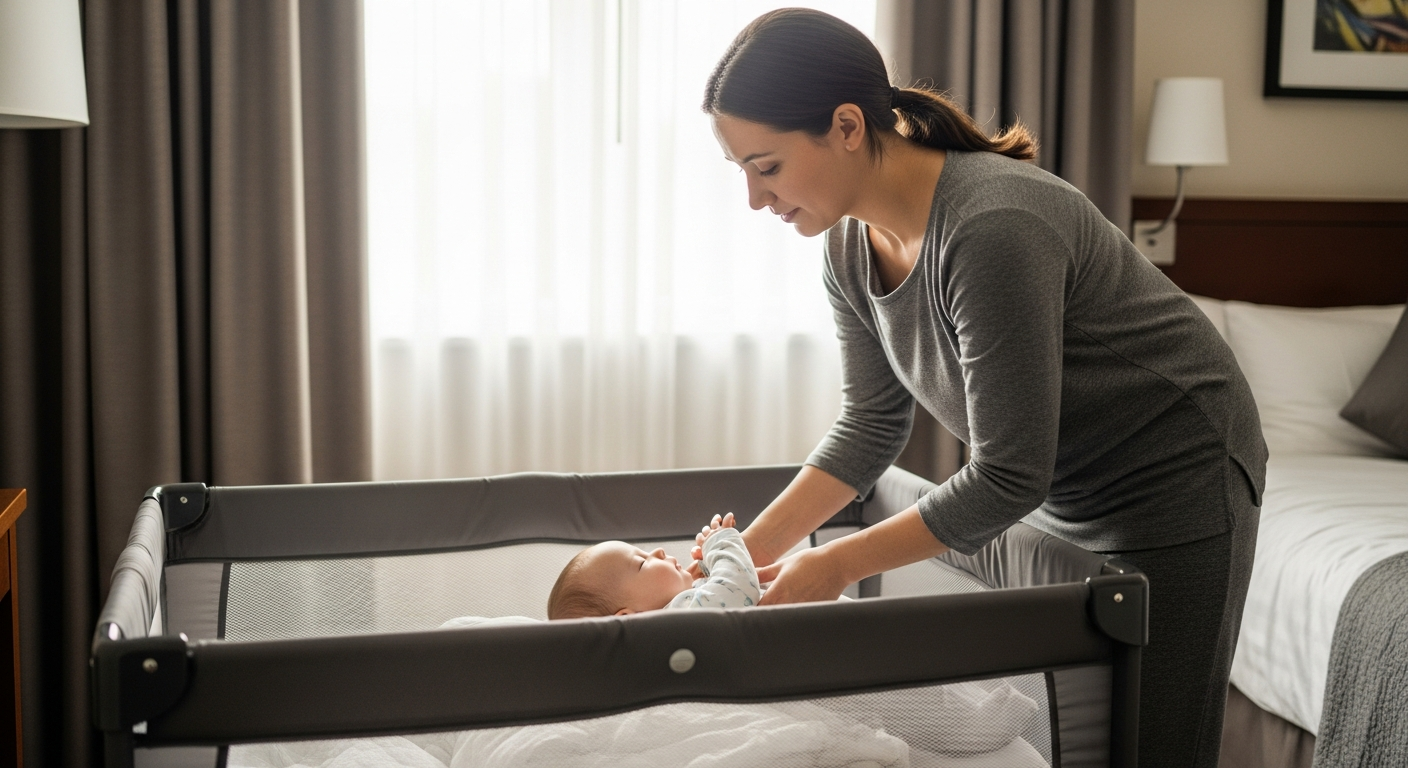
Consider bringing a portable crib or travel bassinet that your baby is already familiar with. Sleeping in a familiar bed can make a big difference in their ability to settle down.
If you’re co-sleeping, make sure the sleeping environment is safe and comfortable for your baby. Follow safe co-sleeping guidelines to reduce the risk of accidents.
Bring a nightlight if your baby is used to sleeping with one. A soft, dim light can provide a sense of security without being too stimulating.
If you’re breastfeeding or bottle-feeding, bring all the necessary supplies, such as bottles, nipples, and formula. Having these items on hand will ensure that you can feed your baby easily and conveniently.
Consider bringing a small humidifier if the air in your destination is dry. Dry air can irritate your baby’s nasal passages and make it harder for them to sleep.
If your baby uses a pacifier, bring plenty of spares. Pacifiers can easily get lost or dirty, so it’s always good to have extras on hand.
Before putting your baby down to sleep, check the room for any potential hazards, such as loose cords or sharp objects. Creating a safe sleep environment is essential for your baby’s well-being.
Try to maintain a consistent room temperature. A cool, but not cold, room is generally ideal for sleep.
Remember that even small comforts can make a big difference. A familiar scent, a soft blanket, or a soothing sound can all help your baby feel more secure and relaxed in a new environment.
Adjusting to New Time Zones Gradually
Traveling across time zones can throw off anyone’s sleep, but it can be particularly challenging for babies. To minimize the effects of jet lag baby, start adjusting your baby’s schedule a few days before your trip.
Gradually shift bedtime and wake-up times in 15-30 minute increments to ease the transition. This gradual approach can help your baby’s internal clock adjust more smoothly to the new time zone.
| Day Before Travel | Morning Adjustment | Evening Adjustment |
|---|---|---|
| -3 Days | Wake 15 minutes earlier | Bedtime 15 minutes earlier |
| -2 Days | Wake another 15 minutes earlier | Bedtime another 15 minutes earlier |
| -1 Day | Wake another 15 minutes earlier | Bedtime another 15 minutes earlier |
| On Travel Day | Continue adjusted schedule | Continue adjusted schedule |
Once you arrive at your destination, expose your baby to natural light during the day to help regulate their circadian rhythm. Sunlight is a powerful cue for the body’s internal clock, signaling wakefulness and helping to adjust to the new time zone.
If you’re traveling eastward, start shifting your baby’s schedule earlier. Conversely, if you’re traveling westward, shift it later.
On the plane or train, try to keep your baby awake during the day if it’s daytime at your destination. This will help them adjust to the new time zone more quickly.
Avoid letting your baby nap for too long during the day, as this can interfere with their nighttime sleep. Short naps are fine, but try to keep them from sleeping for more than a couple of hours at a time.
If your baby wakes up in the middle of the night, avoid turning on bright lights or engaging in stimulating activities. Keep the room dark and quiet, and try to soothe them back to sleep.
Be patient and understanding. It can take several days for your baby to fully adjust to a new time zone, so don’t get discouraged if they’re not sleeping well right away.
Consider using a red light bulb in your baby’s room at night. Red light is less disruptive to the circadian rhythm than blue light, which is emitted by electronic devices.
If you’re using a sound machine, choose one that emits a consistent, low-frequency sound. Avoid sounds that are too stimulating or variable.
Make sure your baby is well-fed and hydrated. Hunger and thirst can both disrupt sleep, so offer them food and drinks regularly.
If your baby is old enough, try to engage them in activities that are appropriate for the new time zone. For example, if it’s morning at your destination, take them outside to play in the sunlight.
Remember that every baby is different, and what works for one baby may not work for another. Experiment with different strategies to find what works best for your child.
Maintaining Bedtime Routines on the Road
Consistency is key when it comes to baby sleep, and maintaining your bedtime routine while traveling can provide a sense of normalcy and comfort. Even in a new environment, familiar routines can signal to your baby that it’s time to wind down and prepare for sleep.
Stick to your usual bedtime routine as closely as possible, whether it includes a bath, a story, or a lullaby. These familiar rituals can help your baby feel secure and relaxed, making it easier for them to fall asleep.
If a full bath isn’t feasible, a quick wipe-down with a warm washcloth can still be a calming part of the routine. The key is to maintain the sequence of events that your baby associates with bedtime.
Be patient and flexible; it may take a few nights for your baby to adjust to sleeping in a new place. Offer extra cuddles and reassurance, and try to stay calm and relaxed yourself, as your baby can sense your anxiety.
If your baby is used to a specific bedtime story, bring that book with you. Reading a familiar story can be a comforting and predictable part of the routine.
If you sing lullabies, continue to sing them, even if you feel self-conscious singing in a new place. Your baby will appreciate the familiar sound of your voice.
Try to keep the bedtime routine consistent in terms of timing. If your baby usually goes to bed at 7:00 PM, try to stick to that time as closely as possible, even when traveling.
Avoid introducing new or exciting activities right before bedtime. Stick to calming and relaxing activities that will help your baby wind down.
If you’re staying in a hotel room, try to create a separate sleep space for your baby. This could be a travel crib, a bassinet, or even just a designated area on the floor.
If your baby is used to a specific temperature in their room, try to maintain that temperature as closely as possible. Use a portable fan or heater to regulate the room temperature if needed.
If your baby uses a humidifier, bring a travel-sized humidifier with you. Dry air can irritate their nasal passages and make it harder for them to sleep.
If your baby is teething, offer them a teething toy or a cold washcloth to chew on before bedtime. This can help relieve discomfort and make it easier for them to fall asleep.
If your baby is having trouble settling down, try a gentle massage. Massaging their back, arms, and legs can help them relax and feel more comfortable.
Remember that the goal is to create a sense of normalcy and predictability for your baby. By sticking to your usual bedtime routine, you can help them feel more secure and relaxed, even in a new environment.
Don’t be afraid to adjust the routine slightly if needed. The most important thing is to be responsive to your baby’s needs and to create a routine that works for both of you.
Dealing with Sleep Challenges During Travel
Despite your best efforts, sleep challenges may still arise during travel. Teething, unfamiliar noises, or a change in routine can all contribute to sleep disruptions.
Pack any necessary medications, such as pain relievers for teething or motion sickness remedies, to address potential discomforts. Being prepared can help you quickly address issues and minimize disruptions to your baby’s sleep.
- Offer extra comfort and reassurance
- Consider a gentle massage
- Use white noise to mask disturbances
- Ensure the room is dark and cool
- Stay consistent with the bedtime routine
If your baby wakes up during the night, try to respond calmly and quietly. Avoid turning on bright lights or engaging in stimulating activities, as this can make it harder for them to fall back asleep.
If your baby is teething, consider giving them a dose of pain reliever before bedtime. This can help reduce discomfort and make it easier for them to sleep through the night.
If your baby is experiencing motion sickness, try giving them a small snack before traveling. Avoid giving them sugary drinks or foods, as these can worsen motion sickness.
If your baby is scared of unfamiliar noises, try using a white noise machine to mask the sounds. White noise can help create a consistent and calming environment that promotes sleep.
If your baby is having trouble adjusting to the new environment, try spending some extra time with them during the day. This can help them feel more secure and comfortable in their surroundings.
If your baby is refusing to go to sleep, try rocking them or singing them a lullaby. These soothing activities can help them relax and drift off to sleep.
If your baby is waking up frequently during the night, try offering them a small snack or a drink of water. Hunger or thirst can sometimes be the cause of nighttime awakenings.
If your baby is having nightmares, try comforting them and reassuring them that they are safe. Nightmares are common in young children, and they usually pass with time.
If your baby is sleepwalking, gently guide them back to bed. Sleepwalking is usually harmless, but it’s important to make sure that your baby is safe.
If you’re concerned about your baby’s sleep, talk to your pediatrician. They can help you identify any underlying medical conditions that may be affecting your baby’s sleep.
Remember that sleep challenges are common, especially when traveling. Be patient and understanding, and try to create a supportive and nurturing environment for your baby.
Don’t be afraid to ask for help from family or friends. Traveling with a baby can be exhausting, so it’s important to take care of yourself as well.
Ultimately, the goal is to create a safe and comfortable sleep environment for your baby, even when you’re on the road. With a little planning and preparation, you can help your baby get the rest they need, even when traveling.
Getting Back on Track After Your Trip
Once you return home, it’s important to reestablish your baby’s regular sleep schedule as quickly as possible. The sooner you get back to your routine, the easier it will be for your baby to readjust.
Resume your usual bedtime routine and sleep environment, and be consistent with wake-up and nap times. It may take a few days for your baby to fully readjust, so be patient and offer extra support.
Avoid the temptation to let your baby sleep in or skip naps, as this can further disrupt their sleep patterns. Consistency is key to helping your baby’s internal clock reset and get back on track.
If you’re struggling to get your baby’s sleep back on track, consider consulting with a sleep consultant or pediatrician for guidance. They can offer personalized advice and strategies to address any specific sleep challenges your baby may be experiencing.
The first day back, try to stick to your normal wake-up time, even if your baby is still tired. This will help to reset their circadian rhythm.
Offer meals and snacks at your usual times. This will help to regulate their digestive system and make them feel more comfortable.
Spend some extra time playing and cuddling with your baby during the day. This will help them to feel secure and loved, and it will also help to tire them out for bedtime.
Avoid scheduling any major activities or events for the first few days back. This will give your baby time to adjust to being home and to get back into their routine.
If your baby is having trouble falling asleep at night, try giving them a warm bath or reading them a story. These relaxing activities can help to calm them down and prepare them for sleep.
If your baby is waking up frequently during the night, try offering them a small snack or a drink of water. Hunger or thirst can sometimes be the cause of nighttime awakenings.
Be patient and understanding. It may take a week or two for your baby to fully readjust to being home. Don’t get discouraged if they’re not sleeping well right away.
If you’re feeling overwhelmed, don’t hesitate to ask for help from family or friends. Having someone to watch your baby for a few hours can give you a chance to rest and recharge.
Remember that you’re not alone. Many parents struggle to get their baby’s sleep back on track after a trip. With a little patience and consistency, you can help your baby get back to their normal sleep schedule.
If you’re still having trouble after a few weeks, consider talking to your pediatrician or a sleep consultant. They can offer personalized advice and strategies to help you get your baby’s sleep back on track.
The most important thing is to be consistent and to create a supportive and nurturing environment for your baby. With your love and support, they will eventually get back to their normal sleep schedule.
Baby Travel Tips
Traveling with a baby sleep schedule can seem like a huge task, but there are many baby travel tips to help ease the process. Being organized and prepared can make a big difference in how smoothly your trip goes.
Pack a travel-sized first-aid kit with essentials like baby pain relievers, diaper rash cream, and any necessary medications. This ensures you have immediate access to remedies for common travel ailments.
Bring plenty of diapers, wipes, and changes of clothes to accommodate unexpected messes or delays. Having extra supplies on hand can prevent stressful situations and keep your baby comfortable throughout the journey.
Consider using a travel stroller or baby carrier to navigate airports or busy areas more easily. These tools allow you to keep your baby close while freeing up your hands for luggage and other tasks.
When flying, consider breastfeeding or offering a bottle during takeoff and landing to help relieve pressure in your baby’s ears. This can prevent discomfort and make the flight more pleasant.
Pack a variety of snacks and drinks to keep your baby satisfied during the journey. Choose healthy options like fruits, vegetables, and whole-grain crackers.
Bring a few favorite toys and books to keep your baby entertained. This can help to prevent boredom and restlessness.
Consider using a travel pillow to support your baby’s head and neck during naps. This can help them to sleep more comfortably.
Dress your baby in comfortable and breathable clothing. Avoid clothing that is too tight or restrictive.
Bring a portable changing pad to make diaper changes easier and more hygienic. This will protect your baby from germs and bacteria.
Consider using a diaper disposal bag to contain soiled diapers. This will help to prevent odors and keep your surroundings clean.
Bring a small blanket to provide warmth and comfort. This can be especially helpful on airplanes or in air-conditioned rooms.
Consider using a car seat adapter to attach your car seat to your stroller. This can make it easier to transport your baby through airports and other busy areas.
Bring a copy of your baby’s medical records in case of an emergency. This will provide important information to healthcare providers.
Most importantly, be patient and flexible. Traveling with a baby can be unpredictable, so be prepared to adjust your plans as needed.
Sleep on Vacation
Prioritizing sleep on vacation is crucial not only for your baby but also for your own well-being. A well-rested family is better equipped to enjoy the travel experience and create lasting memories.
Try to maintain a balance between sticking to your baby’s sleep schedule and allowing for some flexibility to enjoy vacation activities. While consistency is important, it’s also okay to adjust slightly to accommodate special events or outings.
Take turns with your partner to allow each other time to rest and recharge. Traveling with a baby can be exhausting, so sharing the responsibilities can help prevent burnout and ensure everyone gets the sleep they need.
Don’t be afraid to ask for help from family, friends, or hotel staff if you need a break. Taking advantage of available support can make a significant difference in your ability to manage sleep and enjoy your vacation.
If you’re staying in a hotel, inquire about crib rentals or other baby-friendly amenities. Many hotels offer these services to make traveling with a baby easier.
Consider booking a hotel room with a separate bedroom or a suite. This will give you more space and privacy, and it will also make it easier to put your baby to sleep without disturbing you.
If you’re staying in a vacation rental, make sure it is equipped with all the necessary baby gear, such as a crib, high chair, and changing table. This will save you from having to pack these items yourself.
Plan your activities around your baby’s nap schedule. Try to schedule outings for times when your baby is likely to be awake and alert.
Be prepared to adjust your plans if your baby is not feeling well or is having trouble sleeping. It’s important to be flexible and to prioritize your baby’s needs.
Don’t try to do too much. Vacations are meant to be relaxing, so don’t overschedule yourself or your baby. Leave plenty of time for rest and relaxation.
Remember that it’s okay to say no to activities or events that are not conducive to your baby’s sleep schedule. It’s important to prioritize your baby’s needs, even if it means missing out on some fun.
Take advantage of opportunities to rest and recharge. Nap when your baby naps, or take a few minutes each day to relax and de-stress.
Don’t feel guilty about taking time for yourself. Taking care of yourself is essential for being a good parent.
Most importantly, remember to enjoy your vacation. Traveling with a baby can be challenging, but it can also be a rewarding experience. Cherish the memories you make with your little one.
Conclusion
Traveling with a baby sleep schedule requires careful planning and a flexible approach. By creating a familiar sleep environment, adjusting to time zones gradually, and maintaining consistent routines, you can minimize disruptions and ensure your baby gets the rest they need.
Remember to prioritize sleep on vacation for both your baby and yourself, and don’t hesitate to ask for help when needed. With the right strategies, you can navigate travel while keeping your little one’s sleep on track, making for a more enjoyable experience for everyone.
So pack your bags, prepare your travel essentials, and embark on your adventure with confidence, knowing that you have the tools and knowledge to manage your baby’s sleep schedule on the go. Happy travels and sweet dreams!
Traveling with a baby can be a wonderful experience, creating lasting memories for your family. While it presents unique challenges, with preparation and flexibility, you can navigate these hurdles successfully.
Remember that every baby is different, and what works for one family may not work for another. Be open to experimenting with different strategies and finding what works best for you.
Don’t be afraid to ask for advice from other parents who have traveled with babies. They can offer valuable insights and tips that you may not have considered.
Ultimately, the key to successful travel with a baby is to be prepared, flexible, and patient. With these qualities, you can create a memorable and enjoyable experience for your entire family.