

Discovering your toddler has become a crib escape artist can be both alarming and frustrating. You tuck them in, say goodnight, and then, seemingly out of nowhere, they’re standing beside your bed or exploring the house. This newfound skill, while a sign of their growing independence, raises serious concerns about their safety and disrupts bedtime routines.
Fortunately, there are several strategies you can implement to keep your little one safe and sound within the confines of their crib. This article will provide you with practical crib climbing prevention tips to address this common parenting challenge, focusing on creating a secure sleep environment and encouraging your child to stay put.
We’ll explore everything from adjusting the crib itself to understanding the reasons behind your toddler’s climbing antics. By understanding the ‘why’ and implementing the right ‘how,’ you can restore peace to your evenings and ensure your child’s safety. Let’s turn that toddler escape artist into a happy, secure sleeper.
Why Do Toddlers Climb Out of Their Cribs?
Before diving into crib climbing prevention tips, it’s important to understand why toddlers attempt these daring escapes in the first place. Several factors can contribute to this behavior, each requiring a slightly different approach.
One of the most common reasons is simply developmental progression. As toddlers grow, they gain new motor skills and a natural curiosity to explore their surroundings.
Climbing out of the crib might be their way of testing these newfound abilities and asserting their independence. It’s a physical challenge, and successfully scaling the crib walls can feel like a major accomplishment for a toddler.
Another reason could be that your toddler is simply bored or seeking attention. If they’re not tired or if they associate bedtime with being alone and missing out on family time, they might climb out of the crib as a way to engage with you.
Additionally, the crib might not be as comfortable or inviting as it could be. Overheating, discomfort from scratchy pajamas, or a disruptive sleep environment can all contribute to a toddler’s desire to escape the crib.
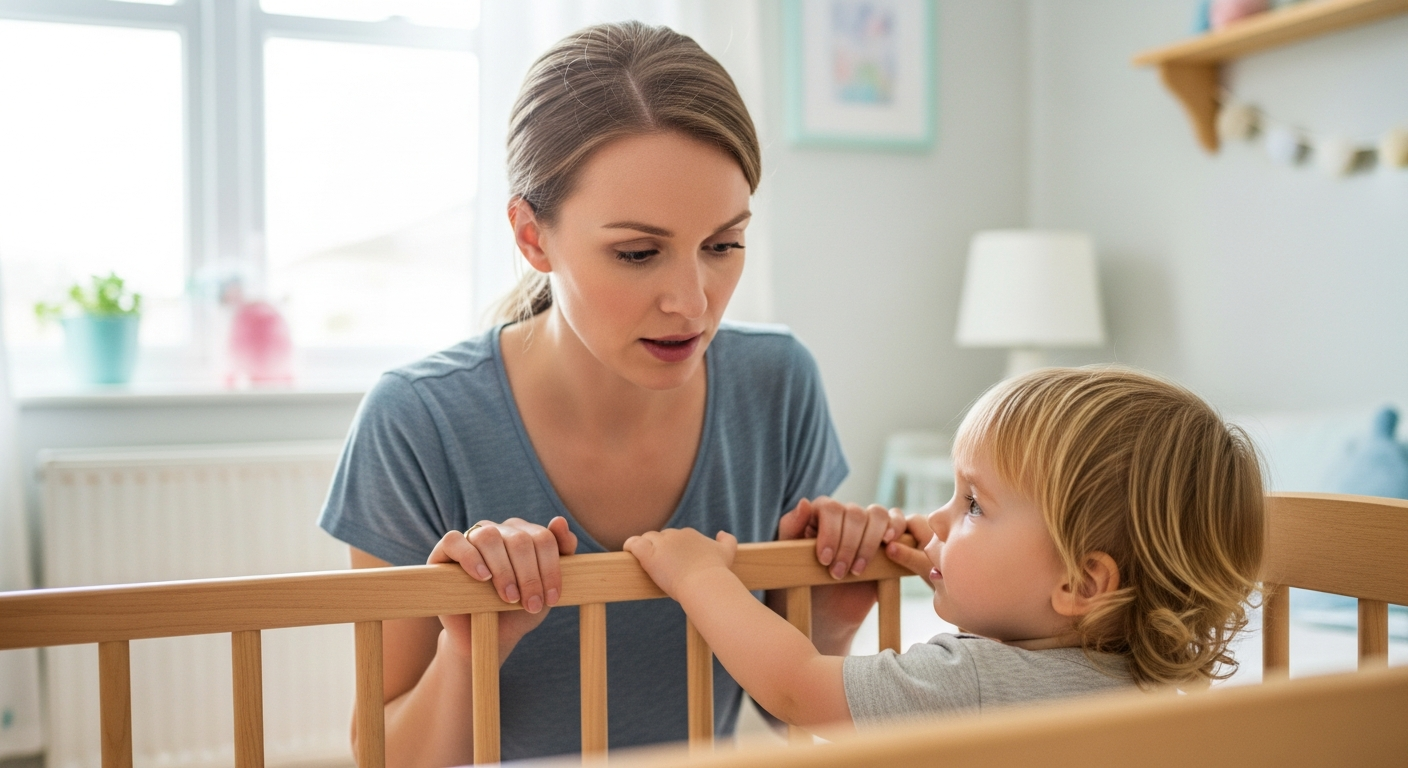
Ensuring a Safe Crib Environment
Creating a safe crib environment is the first and most crucial step in crib climbing prevention. This involves assessing the crib itself and the surrounding area to minimize potential hazards.
Start by ensuring that your crib meets current safety standards. Check for any recalls and verify that all hardware is securely fastened.
Make sure there are no loose or missing parts that could pose a risk to your child. It’s also a good idea to inspect the crib regularly for any signs of wear and tear.
Next, examine the area around the crib. Remove any furniture or objects that your toddler could use as a stepping stone to climb out.
This includes chairs, shelves, and even large toys. The goal is to create a clear, uncluttered space around the crib to eliminate any potential aids for climbing.
Finally, consider placing a soft landing area, such as a thick rug or padded mat, around the crib. While this won’t prevent climbing, it can help cushion any falls and minimize the risk of injury.
Crib Safety Checklist
Prioritizing crib safety is paramount when addressing a toddler escape artist. A thorough safety check helps prevent injuries and ensures a secure sleep environment.
Regular inspections and adjustments are essential to maintain a safe space. Here’s a checklist to guide you through the process.
| Safety Aspect | Action | Frequency |
|---|---|---|
| Crib Hardware | Tighten all screws and bolts | Monthly |
| Mattress Support | Ensure it’s securely attached | Monthly |
| Surrounding Area | Remove climbing aids | Weekly |
| Soft Landing | Check and maintain padding | Weekly |
| Crib Condition | Inspect for damage | Monthly |
| Recall Status | Verify crib model | Annually |
Lowering the Crib Mattress: A Simple Solution
One of the simplest and most effective crib climbing prevention tips is to lower the crib mattress to its lowest setting. This increases the height of the crib walls, making it more difficult for your toddler to climb over.
Most cribs have adjustable mattress heights, allowing you to adapt the crib as your child grows. As soon as your toddler starts pulling themselves up to a standing position, it’s time to lower the mattress.
If you haven’t already done so, check your crib’s instruction manual for guidance on how to adjust the mattress height safely. Typically, this involves removing the mattress and repositioning the support brackets to a lower setting.
Once you’ve lowered the mattress, double-check that it’s securely in place and that there are no gaps between the mattress and the crib walls. A snug fit is essential to prevent your toddler from getting stuck.
Keep in mind that even at the lowest setting, some particularly determined toddlers may still attempt to climb out. However, lowering the mattress is often enough to deter many climbers and buy you some time.
Continue monitoring your toddler’s climbing attempts and consider other prevention strategies if lowering the mattress alone isn’t sufficient. The goal is to create a safe and secure sleep environment while your child is still in the crib.
Using Sleep Sacks to Inhibit Climbing
Sleep sacks, also known as wearable blankets, can be a surprisingly effective tool in crib climbing prevention. These cozy garments restrict leg movement, making it more difficult for toddlers to lift their legs high enough to climb out of the crib.
Unlike traditional blankets, sleep sacks are designed to be worn, ensuring that your toddler stays warm and comfortable throughout the night without the risk of loose blankets posing a safety hazard. The key is to choose a sleep sack that fits properly and restricts leg movement without being too tight or uncomfortable.
Look for sleep sacks that are specifically designed for older babies and toddlers, as these often have a more restrictive design. Avoid sleep sacks with overly loose or flowing bottoms, as these won’t effectively inhibit climbing.
When introducing a sleep sack, be sure to explain to your toddler why they’re wearing it and reassure them that it’s just to help them stay safe in their crib. Some toddlers may initially resist wearing a sleep sack, but with patience and consistency, most will eventually accept it as part of their bedtime routine.
Sleep sacks are not a foolproof solution, as some particularly agile toddlers may still find ways to climb out of the crib even with restricted leg movement. However, they can be a valuable tool in your crib climbing prevention arsenal, especially when combined with other strategies.
Always prioritize safety and comfort when using a sleep sack, and discontinue use if your toddler becomes distressed or if you notice any signs of overheating. The goal is to create a safe and comfortable sleep environment that discourages climbing and promotes restful sleep.
Transitioning to a Toddler Bed: Is It Time?
At some point, despite your best efforts at crib climbing prevention, you might need to consider whether it’s time to transition your toddler to a toddler bed or a regular bed. This decision shouldn’t be taken lightly, as it involves weighing your child’s safety, maturity, and readiness for a new sleep environment.
There’s no magic age for transitioning to a toddler bed, but most children are ready sometime between 18 months and 3 years old. One of the clearest signs that it might be time is if your toddler is consistently climbing out of the crib, even after you’ve implemented various prevention strategies.
If your toddler has mastered the art of escaping, it’s often safer to transition them to a bed where they can get in and out safely, rather than risking a fall from the crib. Another factor to consider is your toddler’s size.
If they’re starting to outgrow the crib, both in height and weight, it might be time to provide them with a more spacious sleep environment. Maturity level also plays a significant role in determining readiness for a toddler bed.
Can your toddler understand and follow simple instructions, such as staying in bed until morning? Are they able to communicate their needs and feelings effectively? If so, they might be ready for the responsibility of sleeping in a bed.
When transitioning to a toddler bed, be sure to create a safe and comfortable sleep environment. Use a bed rail to prevent falls, and ensure that the room is free of hazards. It’s also a good idea to maintain a consistent bedtime routine to help your toddler adjust to their new sleep arrangement.
Signs It’s Time for a Toddler Bed
Deciding when to transition your toddler to a bed is a big decision. There’s no perfect age, but watching for specific signs can guide your choice.
Recognizing these indicators ensures the move is safe and comfortable for your child. Here are key signs suggesting your toddler is ready.
- Consistent crib climbing
- Outgrowing the crib size
- Understanding simple instructions
- Demonstrating self-awareness
- Expressing a desire for a “big kid” bed
Positive Reinforcement for Staying in the Crib
While physical measures like lowering the mattress and using sleep sacks can be effective in crib climbing prevention, it’s equally important to address the behavior from a psychological standpoint. Positive reinforcement can be a powerful tool in encouraging your toddler to stay in their crib.
The key is to reward desired behavior, such as staying in the crib until morning, with praise, attention, or small incentives. Start by setting clear expectations with your toddler.
Explain that you want them to stay in their crib until it’s time to get up, and that you’ll be happy to see them in the morning if they do. When your toddler successfully stays in their crib, offer plenty of praise and positive attention.
Tell them how proud you are of them for being such a good sleeper, and give them a hug or a high-five. You can also use a reward chart to track their progress and offer small incentives for consistent success.
For example, if they stay in their crib for a certain number of nights in a row, they can earn a special sticker, a small toy, or an extra bedtime story. Be consistent with your positive reinforcement and avoid giving attention or rewards when your toddler climbs out of the crib.
This can inadvertently reinforce the unwanted behavior. Instead, calmly return them to the crib and remind them of the expectations.
Creating a Relaxing Bedtime Routine
A calming bedtime routine sets the stage for restful sleep and reduces the likelihood of crib climbing. Consistency is key, so aim to follow the same routine every night.
Start with a warm bath to relax your toddler’s muscles, followed by a gentle massage. Read a soothing story together, dim the lights, and play soft music.
Avoid screen time for at least an hour before bed, as the blue light emitted from electronic devices can interfere with sleep. Offer a light snack, such as a small cup of milk or a piece of fruit, to satisfy any hunger pangs.
Create a comfortable sleep environment by ensuring that the room is dark, quiet, and cool. Use blackout curtains to block out any external light, and consider using a white noise machine to mask any disruptive sounds.
Dress your toddler in comfortable, breathable pajamas and avoid overdressing them. Overheating can make it difficult to fall asleep and increase the likelihood of climbing out of the crib.
Finally, establish a consistent bedtime and wake-up time, even on weekends, to regulate your toddler’s internal clock. A well-established bedtime routine can make a significant difference in promoting restful sleep and reducing the urge to climb out of the crib.
Addressing Separation Anxiety
Sometimes, crib climbing is rooted in separation anxiety. Toddlers may climb out of the crib because they miss their parents or feel anxious about being alone.
To address this, reassure your child that you’re nearby and will always come back. Practice short separations during the day to help your toddler become more comfortable with being apart from you.
Start with brief periods of leaving the room while they’re playing, and gradually increase the duration as they become more confident. Establish a consistent bedtime routine to signal that it’s time to sleep.
This helps create a sense of predictability and security. Offer a transitional object, such as a favorite stuffed animal or blanket, to provide comfort and reassurance.
Avoid sneaking out of the room while your toddler is falling asleep, as this can increase their anxiety and make them more likely to climb out of the crib. Instead, say goodnight and let them know that you’ll be back in the morning.
If separation anxiety persists, consider seeking guidance from a pediatrician or child psychologist. They can offer additional strategies and support to help your toddler overcome their fears.
Conclusion
Dealing with a toddler escape artist can be challenging, but with the right strategies and a little patience, you can create a safe and secure sleep environment for your child. Remember that every child is different, and what works for one toddler might not work for another.
Experiment with different crib climbing prevention tips and find the combination that works best for your family. Whether it’s adjusting the crib, using sleep sacks, or transitioning to a toddler bed, the goal is to ensure your child’s safety and promote restful sleep.
By understanding the reasons behind your toddler’s climbing antics and addressing them with a combination of physical measures and positive reinforcement, you can turn those daring escapes into peaceful nights for everyone.
And always remember, consistency is key. Establishing a consistent bedtime routine and sticking to it as much as possible will help your toddler feel secure and reduce the likelihood of unwanted nighttime adventures. Good luck, and sweet dreams!