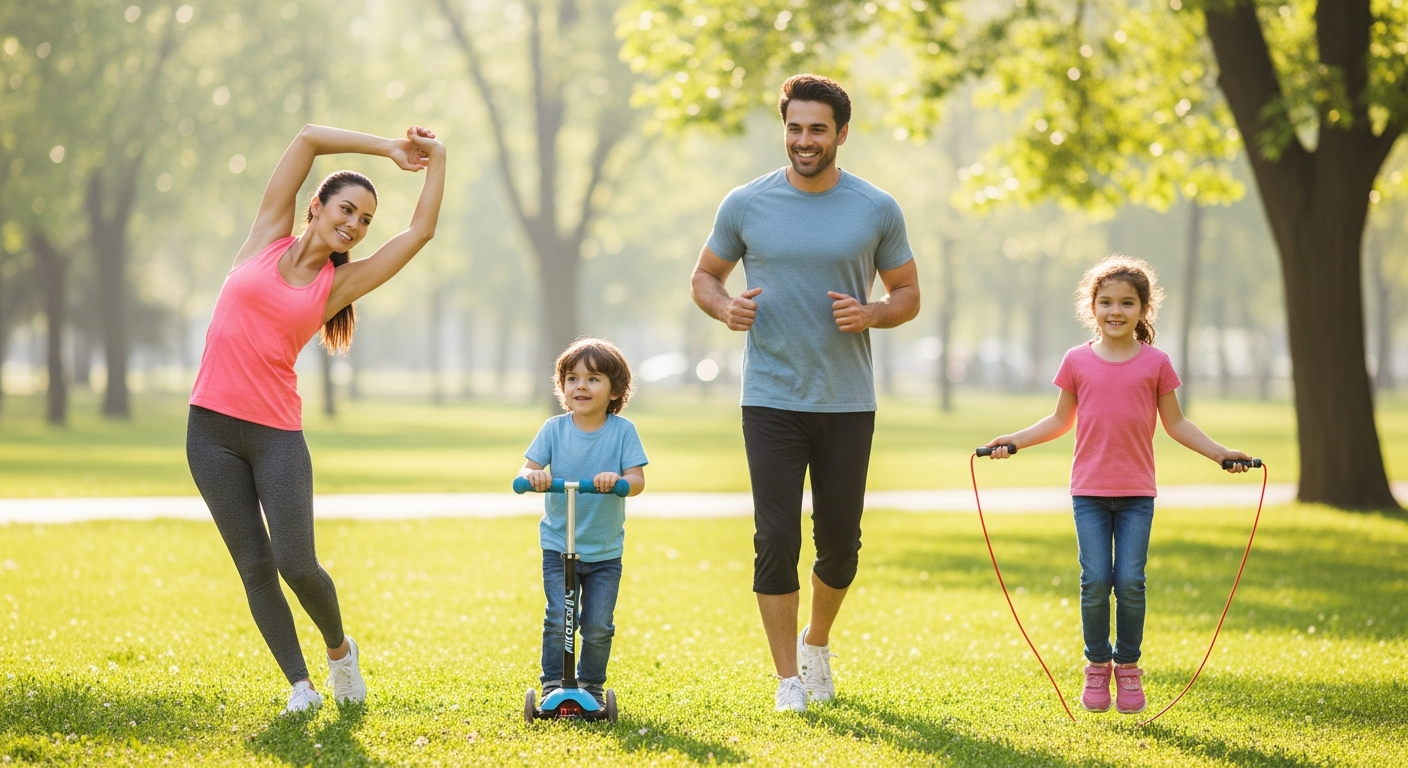
In today’s fast-paced world, it can be challenging to prioritize health and wellness, especially when it comes to our families. But, establishing an exercise routine for families is an investment that yields significant rewards. Let’s get moving!
Creating a fun and engaging exercise routine for families doesn’t have to be a daunting task. This article will guide you through the steps of creating an exercise routine for families, making it an enjoyable experience for everyone involved, and reaping the rewards of family fitness.
From understanding the importance of family fitness to choosing activities that suit everyone’s preferences, we’ll cover it all. We will also touch on incorporating outdoor adventures, making exercise fun and engaging, setting realistic goals, and staying motivated.
The Importance of Family Fitness
Family fitness is more than just a trend; it’s a cornerstone of a healthy and happy life. Regular physical activity offers numerous benefits, impacting both physical and mental well-being.
For children, exercise promotes healthy growth and development, strengthens bones and muscles, and helps maintain a healthy weight. It also improves cardiovascular health, reducing the risk of chronic diseases later in life.
Adults also reap significant rewards from regular exercise. It helps manage weight, lowers blood pressure, and reduces the risk of heart disease, type 2 diabetes, and certain cancers.
Beyond the physical benefits, family fitness has a profound impact on mental and emotional well-being. Exercise releases endorphins, which have mood-boosting effects, reducing stress, anxiety, and symptoms of depression.
Furthermore, family fitness provides an opportunity for quality time together. It allows families to bond, communicate, and support each other in a healthy and positive environment.

Establishing healthy habits early in life can have a lasting impact on children’s well-being. By prioritizing family fitness, you’re setting a positive example and instilling a lifelong love of physical activity.
Consider the long-term effects of inactivity and poor lifestyle choices. Family fitness can be a preventative measure against various health issues that may arise later in life.
It’s also important to recognize that a healthy family is a happy family. When everyone is feeling their best, it creates a more positive and supportive home environment.
Family fitness also encourages teamwork and cooperation. Working towards a common goal, such as completing a hike or mastering a new sport, can strengthen family bonds.
Don’t underestimate the power of shared experiences. Family fitness creates memories that will be cherished for years to come.
Moreover, engaging in physical activity together can improve sleep quality for all family members. Regular exercise helps regulate sleep patterns and promotes restful sleep.
Family fitness can also boost self-esteem and confidence. As family members achieve their fitness goals, they’ll feel a sense of accomplishment and pride.
It’s not just about the physical benefits; it’s about creating a culture of health and wellness within your family. This culture can extend beyond exercise to include healthy eating habits and stress management techniques.
Ultimately, family fitness is an investment in your family’s future. It’s a way to ensure that everyone is healthy, happy, and thriving for years to come.
Choosing Activities That Everyone Enjoys
The key to a successful family fitness routine is choosing activities that appeal to everyone. Consider each family member’s age, interests, and physical abilities when making your selections.
For younger children, activities like tag, hide-and-seek, or simple games in the park can be a great way to get them moving. Older children might enjoy sports like basketball, soccer, or swimming.
Adults can explore options like jogging, cycling, or joining a fitness class together. The goal is to find something that everyone can participate in and enjoy.
Don’t be afraid to try new things and experiment with different activities until you find the perfect fit. The most important thing is that everyone is having fun and staying active.
Consider creating a family “activity wish list.” Each family member can write down activities they’d like to try, and you can rotate through the list.
Think about activities that can be easily modified to suit different fitness levels. For example, a bike ride can be adjusted in length and difficulty to accommodate everyone.
Don’t underestimate the power of active play. Simple activities like playing catch or kicking a ball around can be a fun and effective way to get exercise.
Consider incorporating activities that are specific to your local area. This could include hiking local trails, visiting a nearby park, or participating in community sports leagues.
Remember to factor in the time of year when choosing activities. In the summer, swimming and water sports are great options, while in the winter, skiing or ice skating might be more appealing.
It’s also important to be mindful of any physical limitations or health concerns that family members may have. Choose activities that are safe and appropriate for everyone’s abilities.
Consider incorporating activities that promote mindfulness and relaxation. Yoga, tai chi, or even a simple walk in nature can be beneficial for both physical and mental well-being.
Don’t be afraid to get creative and think outside the box. There are countless ways to make exercise fun and engaging for the whole family.
Remember that the goal is to create a positive and enjoyable experience for everyone. Avoid activities that are too competitive or stressful, as this can discourage participation.
Ultimately, the best activities are the ones that everyone enjoys and that can be sustained over the long term. Focus on finding activities that fit your family’s unique needs and preferences.
Consider incorporating activities that teach new skills. This could include learning to dance, playing a musical instrument, or even learning a new language through active games.
Remember to be flexible and willing to adjust your plans as needed. Sometimes, the best activities are the ones that are spontaneous and unplanned.
Incorporating Outdoor Adventures
Taking your family fitness routine outdoors can add an extra layer of excitement and enjoyment. Nature provides a beautiful backdrop and fresh air, making exercise feel less like a chore and more like an adventure.
Outdoor activities offer a chance to connect with nature, explore new environments, and create lasting memories. Here’s a table of some ideas that you can try.
| Activity | Description | Benefits |
|---|---|---|
| Hiking | Exploring trails in parks or forests | Cardiovascular fitness, leg strength, nature appreciation |
| Cycling | Riding bikes on bike paths or trails | Cardiovascular fitness, leg strength, exploring the neighborhood |
| Swimming | Swimming in a lake, river, or pool | Full-body workout, cardiovascular fitness, cooling off in summer |
| Kayaking/Canoeing | Paddling on a lake or river | Upper body strength, core stability, exploring waterways |
Consider geocaching as a fun and adventurous way to explore your local area. It combines hiking with a treasure hunt, making it engaging for all ages.
Organize a family camping trip and incorporate hiking, swimming, and other outdoor activities into your itinerary. Camping provides an opportunity to disconnect from technology and reconnect with nature.
Visit a local farm or orchard and participate in activities like apple picking or pumpkin picking. These activities are not only fun but also provide a good workout.
Explore your local parks and nature reserves. Many parks offer hiking trails, picnic areas, and other amenities that make them perfect for family outings.
Consider birdwatching as a relaxing and educational outdoor activity. It encourages observation skills and appreciation for nature.
Organize a family scavenger hunt in your backyard or local park. This is a fun way to get everyone moving and exploring their surroundings.
Build a fort in the woods or your backyard. This activity encourages creativity and teamwork while also providing a good workout.
Have a picnic in a scenic location. Pack healthy snacks and enjoy the fresh air and beautiful views.
Go for a nature walk and collect leaves, rocks, and other natural items. Use these items to create art projects or nature displays.
Visit a botanical garden or arboretum. These gardens offer a chance to learn about different plants and flowers while also enjoying a peaceful walk.
Remember to dress appropriately for the weather and bring plenty of water and snacks. Safety should always be a top priority when engaging in outdoor activities.
Consider investing in some basic outdoor gear, such as hiking boots, backpacks, and rain gear. This will make it easier to enjoy outdoor activities regardless of the weather.
Be mindful of the environment and practice Leave No Trace principles. Pack out everything you pack in and avoid disturbing wildlife or vegetation.
Encourage your children to explore and discover new things in nature. This will foster a love of the outdoors and a desire to protect the environment.
Making Exercise Fun and Engaging
To make exercise a sustainable part of your family’s routine, it’s essential to make it fun and engaging. Turn workouts into games, create challenges, and reward yourselves for reaching milestones.
One way to make exercise more enjoyable is to incorporate music. Create a family playlist of upbeat songs that everyone loves and listen to it during your workouts.
Another idea is to turn exercise into a competition. Challenge each other to see who can do the most jumping jacks, push-ups, or sit-ups in a minute.
You can also set up a family fitness challenge with weekly or monthly goals. Reward yourselves with a fun activity or treat when you reach your goals.
Try incorporating themed workouts. For example, you could have a superhero workout where everyone pretends to be their favorite superhero while exercising.
Use technology to your advantage. There are many fitness apps and video games that can make exercise more interactive and engaging.
Consider taking a family dance class. This is a fun way to get exercise while also learning new skills.
Turn chores into exercise. Make a game out of cleaning the house or doing yard work.
Create an obstacle course in your backyard. This is a fun way to challenge yourselves and get some exercise at the same time.
Incorporate active video games into your routine. Games that require movement, like dance games or sports games, can be a fun way to get exercise.
Use visual aids to track progress and stay motivated. Create a chart or graph to track your family’s fitness goals and celebrate milestones.
Make exercise a social activity. Invite friends or family members to join you for workouts or outdoor adventures.
Don’t be afraid to be silly and have fun. The more enjoyable exercise is, the more likely you are to stick with it.
Remember to celebrate your successes and acknowledge your efforts. This will help you stay motivated and feel good about your progress.
Consider incorporating activities that are specific to your family’s interests. If you enjoy music, try dancing. If you enjoy nature, try hiking.
Remember to be flexible and willing to adjust your plans as needed. Sometimes, the best workouts are the ones that are spontaneous and unplanned.
Setting Realistic Goals and Expectations
When starting a family fitness routine, it’s crucial to set realistic goals and expectations. Don’t try to do too much too soon, as this can lead to burnout and discouragement.
Instead, start with small, achievable goals and gradually increase the intensity and duration of your workouts over time. Here are some tips to help you set realistic goals.
- Start with 15-30 minutes of exercise, 2-3 times per week
- Choose activities that everyone enjoys
- Set specific, measurable, achievable, relevant, and time-bound (SMART) goals
- Track your progress and celebrate milestones
- Be patient and persistent
Consider each family member’s current fitness level and any physical limitations they may have. Tailor your goals to meet individual needs and abilities.
Focus on progress, not perfection. It’s okay to have setbacks or miss workouts occasionally. The important thing is to keep moving forward.
Set both short-term and long-term goals. Short-term goals can help you stay motivated in the present, while long-term goals provide a sense of direction.
Be realistic about the time commitment required to achieve your goals. Make sure you have enough time in your schedule to dedicate to exercise.
Don’t compare yourselves to others. Everyone progresses at their own pace. Focus on your own journey and celebrate your own achievements.
Be prepared to adjust your goals as needed. As you progress, you may find that you need to increase or decrease the intensity or duration of your workouts.
Focus on the positive aspects of exercise. Emphasize the benefits of feeling healthier, stronger, and more energetic.
Remember that consistency is key. Even small amounts of exercise can make a big difference over time.
Don’t be afraid to seek professional guidance. A personal trainer or fitness coach can help you set realistic goals and create a safe and effective workout plan.
Celebrate your successes, no matter how small. Acknowledge your efforts and reward yourselves for reaching milestones.
Be patient and persistent. It takes time to see results. Don’t get discouraged if you don’t see progress immediately.
Remember that the goal is to create a healthy and sustainable lifestyle. Focus on making gradual changes that you can maintain over the long term.
Be kind to yourselves. Don’t beat yourselves up if you miss a workout or fall off track. Just get back on track as soon as possible.
Staying Motivated and Consistent
Staying motivated and consistent with your family fitness routine can be challenging, but it’s essential for long-term success. Here are some tips to help you stay on track.
First, schedule your workouts in advance and treat them like any other important appointment. Make sure everyone knows when and where the workouts will take place, and hold each other accountable.
Second, find a workout buddy or join a fitness group for extra support and encouragement. Exercising with others can make it more fun and help you stay motivated.
Finally, don’t be afraid to adjust your routine as needed to keep things interesting and challenging. Try new activities, change the location of your workouts, or set new goals to keep everyone engaged.
Keep a fitness journal to track your progress and reflect on your accomplishments. This can help you stay motivated and see how far you’ve come.
Find ways to make exercise more convenient. For example, you could set up a home gym or choose activities that can be done anywhere, anytime.
Reward yourselves for reaching milestones. This could be anything from a healthy treat to a fun activity.
Visualize your goals. Imagine yourself achieving your fitness goals and feeling the positive effects of exercise.
Listen to motivational podcasts or audiobooks while you exercise. This can help you stay focused and inspired.
Surround yourselves with positive influences. Spend time with people who support your fitness goals and encourage you to stay active.
Remember your “why.” Remind yourselves why you started exercising in the first place. What are your motivations and goals?
Don’t be afraid to ask for help. If you’re struggling to stay motivated, reach out to a friend, family member, or fitness professional for support.
Be patient and persistent. It takes time to develop healthy habits. Don’t get discouraged if you have setbacks.
Focus on the process, not just the outcome. Enjoy the journey of becoming healthier and fitter.
Remember that exercise is not just about physical health. It’s also about mental and emotional well-being.
Be proud of yourselves for taking the time to prioritize your health and well-being. You deserve it!
Conclusion
Creating a fun and healthy exercise routine for families is an investment that yields significant rewards. From improved physical and mental health to stronger family bonds and lasting memories, the benefits are immeasurable.
By following the tips and strategies outlined in this article, you can create an exercise routine for families that everyone enjoys and that becomes a sustainable part of your lifestyle. So, get moving and start reaping the rewards of family fitness today!
Remember that the journey to family fitness is a marathon, not a sprint. Be patient, persistent, and enjoy the process.
Celebrate your successes and learn from your setbacks. Every step you take towards a healthier lifestyle is a step in the right direction.
Inspire others to join you on your fitness journey. Share your experiences and encourage your friends and family to prioritize their health and well-being.
Make family fitness a lifelong commitment. It’s an investment in your family’s future that will pay dividends for years to come.
So, gather your family, lace up your shoes, and get ready to embark on a fun and rewarding fitness adventure. The possibilities are endless!
Embrace the challenges and celebrate the triumphs. Together, you can achieve your fitness goals and create a healthier, happier family.
Remember that the most important thing is to have fun and enjoy the process. Family fitness should be a positive and enjoyable experience for everyone involved.
So, what are you waiting for? Start planning your family fitness routine today and reap the rewards of a healthier, happier life!