Playtime is more than just fun and games for babies, it’s a crucial period for their growth and development. A well-structured playtime routine for babies can significantly contribute to their cognitive, motor, social, and emotional skills.
By understanding the importance of playtime, parents and caregivers can create an environment that fosters learning, exploration, and joy. In this article, we will discuss how to establish an enriching playtime routine for babies, focusing on age-appropriate activities and toys, safety considerations, and ways to stimulate their senses.
Setting up a playtime routine for babies will not only help them reach their developmental milestones but also create lasting memories of joyful interaction and discovery. Let’s explore how to make the most of playtime, turning it into a valuable learning experience for your little one.
Understanding Baby’s Developmental Stages
Babies go through rapid developmental changes in their first year, and their playtime should reflect these milestones. Understanding these stages can help you tailor activities to suit their current abilities and interests.
From newborn reflexes to early problem-solving skills, each phase presents unique opportunities for learning and growth. Recognizing these developmental stages ensures that playtime remains engaging and beneficial for your baby.
In the first three months, babies are primarily focused on sensory exploration. Activities like gentle rocking, soft music, and visual tracking with high-contrast toys are ideal.
Between 3 to 6 months, babies start developing better hand-eye coordination and reaching abilities. Introduce toys they can grasp, shake, and mouth safely, such as rattles and soft blocks.
From 6 to 9 months, babies begin to sit up, crawl, and explore their environment more actively. Offer toys that encourage movement, like balls and push-along toys, and those that promote cognitive skills, like stacking cups and shape sorters.
Between 9 to 12 months, babies often start pulling themselves up to stand and may even take their first steps. Toys that encourage walking, such as push-and-pull wagons, can be beneficial.
It’s also important to remember that every baby develops at their own pace. Don’t be concerned if your baby isn’t reaching milestones at the exact same time as other babies.
Focus on creating a supportive and stimulating environment that encourages their natural development. Celebrate each small achievement and provide plenty of opportunities for exploration and learning.
During the newborn phase (0-3 months), vision is still developing. High-contrast black and white images or toys can be particularly engaging and helpful for visual development.
Tummy time is also crucial during this phase to strengthen neck and upper body muscles. Make tummy time more enjoyable by placing a mirror or engaging toy in front of them.
As babies enter the 3-6 month stage, they begin to show more interest in interacting with their environment. Toys that make sounds when shaken or squeezed are great for developing cause-and-effect understanding.
Encourage reaching and grasping by holding toys just out of their reach. This helps to improve their motor skills and hand-eye coordination.
In the 6-9 month period, babies are often fascinated by object permanence. Games like peek-a-boo or hiding toys under a blanket can be very engaging and educational.
Provide opportunities for them to practice sitting up, even if they need support. This helps to strengthen their core muscles and improve their balance.
As babies approach their first birthday (9-12 months), they are often becoming more mobile. Create a safe space for them to practice crawling, pulling up, and cruising along furniture.
Offer toys that encourage these movements, such as push-along walkers or toys that can be pulled. Celebrate their efforts and provide encouragement as they explore their newfound mobility.
Choosing Age-Appropriate Toys and Activities
Selecting the right toys and activities is essential for stimulating your baby’s development. Age-appropriate toys not only keep them engaged but also support their physical and cognitive growth.
It’s important to consider safety, durability, and educational value when choosing toys. Always check for small parts that could be a choking hazard and opt for toys made from non-toxic materials.
For newborns, soft, plush toys with contrasting colors are perfect for visual stimulation. Rattles and musical mobiles can also capture their attention and soothe them.
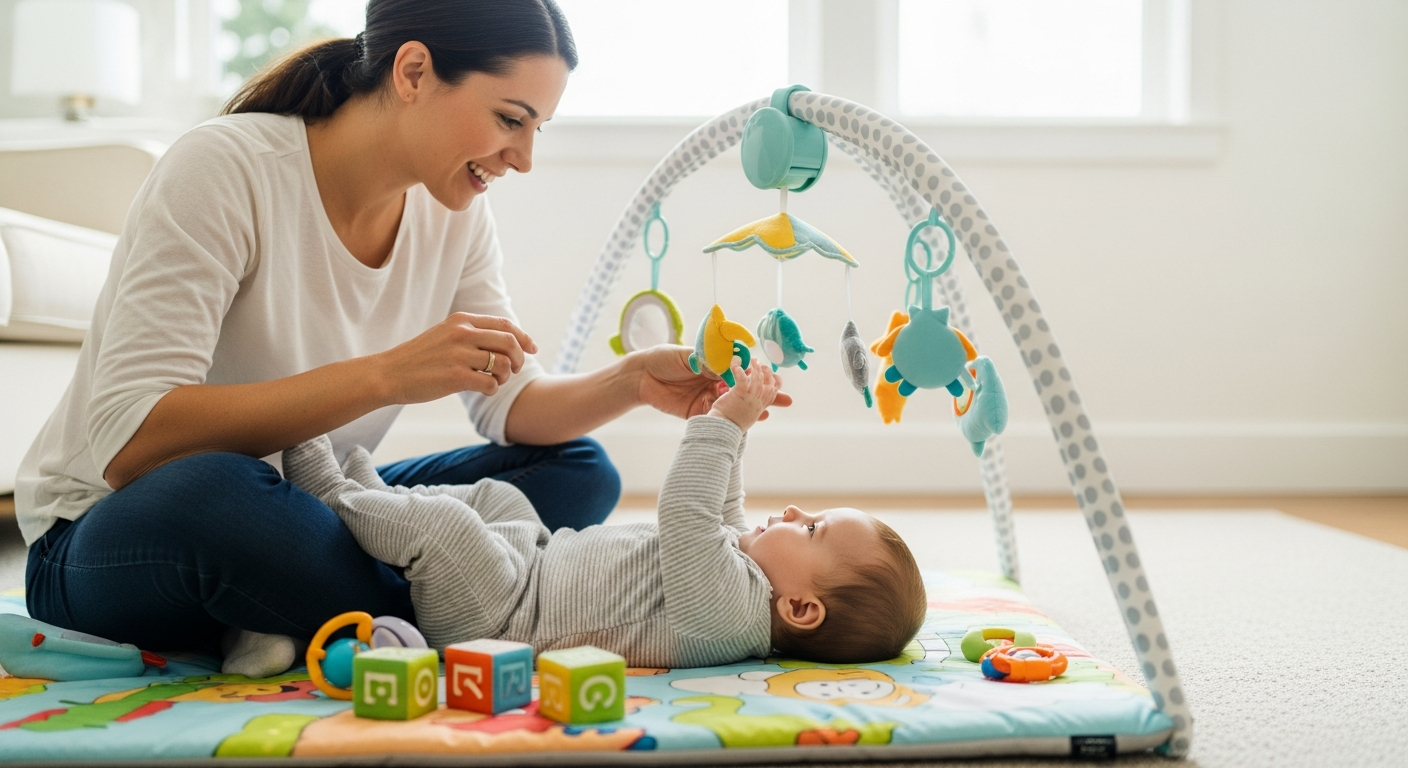
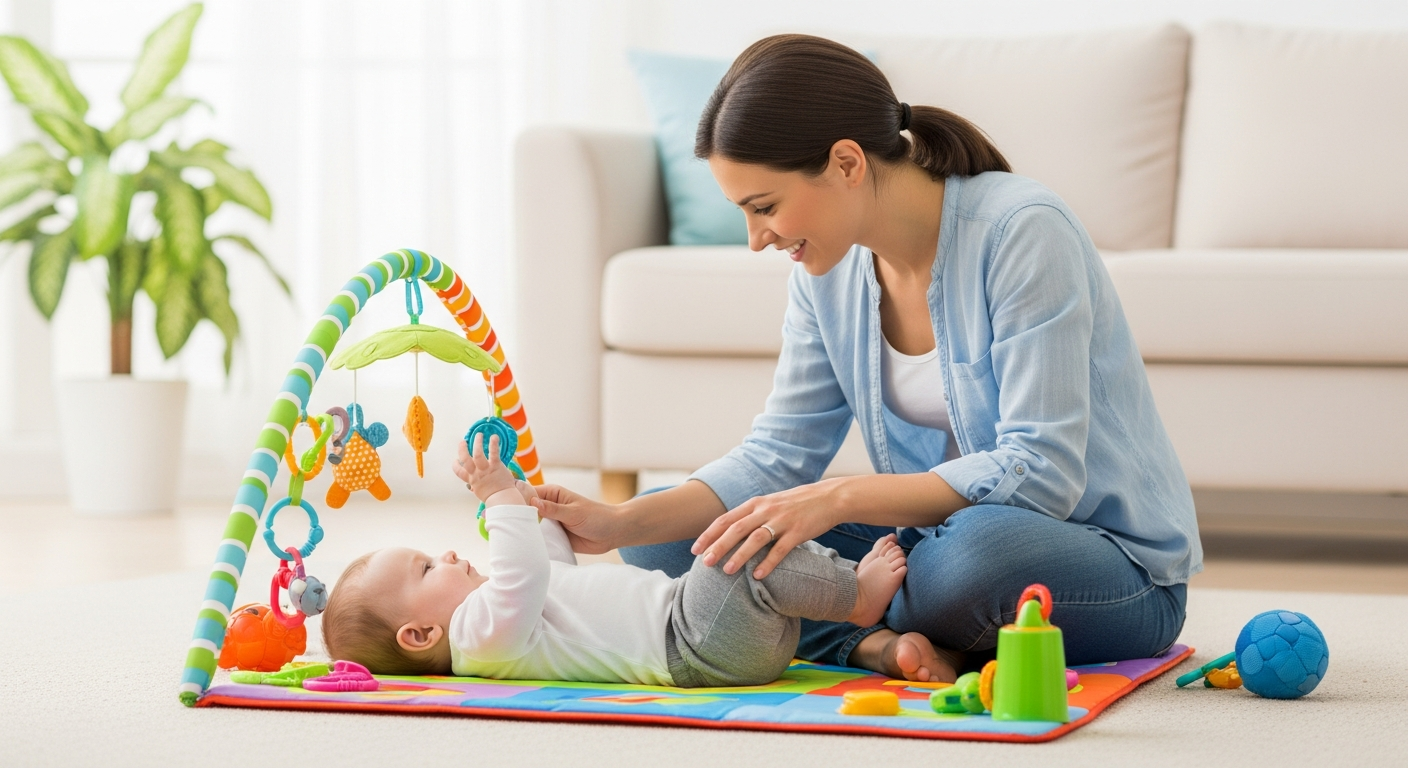
As babies grow, introduce toys that encourage them to reach, grasp, and explore different textures. Teethers, soft blocks, and activity gyms with hanging toys are excellent choices.
Once babies can sit up, toys that promote fine motor skills become more important. Stacking cups, shape sorters, and simple puzzles can help them develop hand-eye coordination and problem-solving abilities.
For older babies, toys that encourage movement and exploration are ideal. Push-and-pull toys, small balls, and simple ride-on toys can help them develop their gross motor skills.
When selecting toys, consider the developmental stage of your baby. A toy that is too advanced may be frustrating, while a toy that is too simple may not hold their interest.
Look for toys that offer a variety of textures, colors, and sounds. This will help to stimulate your baby’s senses and encourage exploration.
Avoid toys with sharp edges, small parts that can be easily detached, or long strings that could pose a strangulation hazard. Always supervise your baby during playtime to ensure their safety.
Consider toys that promote interaction and social play. Soft dolls or puppets can be used to engage in pretend play and storytelling.
Books are also a great option for babies of all ages. Choose board books with simple illustrations and engaging stories to read aloud.
Singing songs and reciting rhymes are also excellent activities for promoting language development. Babies love the rhythm and repetition of these activities.
Remember that everyday household items can also be great toys for babies. Pots, pans, wooden spoons, and empty boxes can all provide hours of entertainment and exploration.
Just be sure to choose items that are safe and clean. Always supervise your baby when they are playing with household items.
Rotate toys regularly to keep your baby engaged and prevent boredom. This will also help to maximize the developmental benefits of each toy.
Don’t feel pressured to buy expensive or fancy toys. Simple, well-designed toys can be just as effective in stimulating your baby’s development.
Creating a Safe and Stimulating Play Environment
A safe and stimulating play environment is crucial for your baby’s development. It allows them to explore and learn without the risk of injury.
This involves setting up a dedicated space where your baby can move freely and interact with their surroundings. It also involves taking steps to minimize potential hazards and create an environment that supports their curiosity and exploration.
| Area | Safety Consideration | Stimulation Tip |
|---|---|---|
| Flooring | Use soft, padded mats to cushion falls | Provide different textures for exploration |
| Furniture | Secure any heavy furniture to the wall | Arrange furniture to encourage crawling |
| Electrical Outlets | Cover all unused outlets with safety caps | Use colorful outlet covers |
| Toys | Regularly inspect toys for damage | Rotate toys to maintain interest |
| Air Quality | Ensure good ventilation in the room | Use a humidifier to maintain optimal humidity |
To ensure safety, start by baby-proofing the designated play area. Cover electrical outlets, secure loose cords, and remove any small objects that could be choking hazards.
Create a stimulating environment by using bright colors, interesting textures, and age-appropriate toys. Rotate toys regularly to keep your baby engaged and prevent boredom.
When creating a safe play environment, think about the potential hazards from a baby’s perspective. Get down on your hands and knees to see what they see and identify any potential dangers.
Pay attention to furniture with sharp edges or corners. Use corner protectors to cushion these areas and prevent injuries.
Secure any heavy furniture, such as bookshelves or dressers, to the wall to prevent them from tipping over. Babies may try to pull themselves up on furniture, so it’s important to ensure that it is stable.
Keep cleaning supplies, medications, and other hazardous substances out of reach. Store them in locked cabinets or on high shelves.
Install safety gates at the top and bottom of stairs to prevent falls. Choose gates that are easy to operate but difficult for babies to open.
Ensure that the play area is well-lit. Good lighting can help to prevent accidents and make it easier for your baby to see and explore their surroundings.
Consider using a playpen or enclosed area to provide a safe space for your baby to play. This can be especially helpful if you have other children or pets in the home.
When creating a stimulating environment, think about incorporating different elements that appeal to your baby’s senses. Use bright colors, interesting patterns, and different textures.
Hang mobiles or other visual stimuli above the play area. Choose items that are visually appealing and that move gently to capture your baby’s attention.
Play soft music or nature sounds to create a calming and stimulating atmosphere. Babies often respond well to gentle sounds.
Provide a variety of toys that encourage different types of play. Include toys that promote reaching, grasping, crawling, and other motor skills.
Rotate toys regularly to keep your baby engaged and prevent boredom. This will also help to maximize the developmental benefits of each toy.
Incorporating Sensory Play Activities
Sensory play is vital for babies as it helps them explore and understand the world through their senses. Activities that engage sight, sound, touch, smell, and taste can enhance their cognitive development and sensory integration.
Introducing a variety of sensory experiences can stimulate your baby’s brain and promote learning. These activities are not only educational but also enjoyable for both you and your baby.
For tactile sensory play, use different textures like soft fabrics, bumpy balls, and smooth wooden toys. Let your baby explore these textures with their hands and feet.
Visual sensory play can include activities like looking at colorful pictures, watching bubbles float, or playing with light-up toys. High-contrast images are especially engaging for younger babies.
Auditory sensory play can involve listening to different types of music, playing with musical instruments, or reading aloud with varied tones. Gentle sounds like lullabies and nature sounds can be calming and soothing.
Taste and smell sensory play should be approached with caution and always under supervision. Offer safe, edible items with different flavors and aromas, such as small pieces of soft fruit or a whiff of a pleasant-smelling flower.
When planning sensory play activities, always prioritize safety. Ensure that all materials are non-toxic and free from small parts that could be a choking hazard.
Supervise your baby closely during sensory play to prevent them from putting anything unsafe in their mouth. Be prepared to clean up any messes that may occur.
For tactile play, consider using a sensory bin filled with different materials such as rice, beans, or pasta. Allow your baby to explore the bin with their hands and feet.
You can also create a tactile board with different textures glued onto a piece of cardboard. Include materials such as felt, sandpaper, and bubble wrap.
For visual play, create a mobile with colorful objects that dangle and move. Hang it above your baby’s crib or play area.
You can also use a flashlight to create shadows on the wall. Babies are often fascinated by the movement of shadows.
For auditory play, sing songs, read stories, or play musical instruments. Babies love the sound of their parents’ voices.
You can also use household items to create different sounds. Bang on pots and pans, shake a container of rice, or crumple paper.
For taste and smell play, offer your baby small pieces of soft fruit or vegetables. Allow them to explore the different flavors and textures.
You can also introduce different scents by letting your baby smell flowers, spices, or essential oils. Always supervise your baby closely during taste and smell play.
Encouraging Exploration and Discovery
Encouraging exploration and discovery is essential for fostering your baby’s curiosity and problem-solving skills. Create opportunities for them to interact with their environment in a safe and supportive way.
Allowing babies to explore at their own pace can enhance their sense of independence and confidence. This also helps them develop a lifelong love of learning.
Set up simple obstacle courses using soft pillows and cushions to encourage crawling and climbing. Make sure the area is safe and supervised, and let your baby navigate the course at their own speed.
Provide a variety of toys and objects with different textures, shapes, and colors for your baby to examine. Let them manipulate and explore these items to understand their properties.
Engage in interactive play by hiding toys under blankets or in boxes and encouraging your baby to find them. This helps develop their object permanence and problem-solving skills.
Take your baby on outdoor adventures, such as walks in the park or visits to the beach, to expose them to new sights, sounds, and smells. Nature provides endless opportunities for exploration and discovery.
Create a “treasure basket” filled with safe household objects for your baby to explore. Include items such as wooden spoons, metal bowls, fabric scraps, and natural objects like pine cones or smooth stones.
Supervise your baby closely as they explore the basket and allow them to choose which items to examine. This encourages independent exploration and decision-making.
Provide opportunities for your baby to explore different environments. Take them to the park, the library, or a friend’s house.
New environments provide new sights, sounds, and smells to stimulate your baby’s senses. Be sure to supervise your baby closely in unfamiliar environments.
Encourage your baby to explore their own body. Let them touch their hands, feet, and face.
Talk to them about their body parts and how they move. This helps them develop body awareness and motor skills.
Provide opportunities for your baby to experiment with different materials. Let them play with water, sand, or paint.
Supervise your baby closely during these activities and provide them with safe materials. This encourages creativity and problem-solving skills.
Follow your baby’s lead during playtime. If they are interested in a particular toy or activity, let them explore it at their own pace.
Avoid interrupting their exploration or trying to force them to play with something else. This helps them develop their own interests and preferences.
Fostering Social and Emotional Development
Playtime is a crucial time for fostering social and emotional development in babies. Through play, babies learn how to interact with others, express their emotions, and develop empathy.
Engaging in interactive play with your baby can strengthen your bond and help them develop essential social skills. It also supports their emotional well-being and self-confidence.
- Engage in face-to-face interactions
- Respond to their cues and expressions
- Use positive reinforcement and praise
- Introduce them to other babies and children
- Create a safe and supportive environment
Engage in face-to-face interactions with your baby during playtime. Make eye contact, smile, and talk to them in a gentle, loving voice.
Respond to your baby’s cues and expressions during play. If they show interest in a particular toy or activity, encourage them to explore it further.
Use positive reinforcement and praise to encourage your baby’s efforts and achievements. Let them know that you are proud of them for trying new things.
Introduce your baby to other babies and children. This can help them learn how to interact with others and develop social skills.
Create a safe and supportive environment where your baby feels comfortable expressing their emotions. Let them know that it’s okay to feel sad, angry, or frustrated.
Play games that involve turn-taking, such as rolling a ball back and forth. This helps babies learn about sharing and cooperation.
Use puppets or stuffed animals to act out different social situations. This can help babies understand how to respond to different emotions and behaviors.
Read books that explore different emotions. Talk about the characters’ feelings and how they handle them.
Model positive social behaviors for your baby. Show them how to be kind, respectful, and empathetic.
Encourage your baby to express their emotions through art, music, or movement. This can be a healthy way for them to release their feelings.
Help your baby develop empathy by pointing out the emotions of others. For example, you could say, “That baby is crying. He must be sad.”
Provide opportunities for your baby to practice social skills in a safe and supportive environment. This will help them develop the confidence they need to interact with others.
Remember that social and emotional development is a gradual process. Be patient and supportive as your baby learns how to navigate the social world.
Establishing a Consistent Playtime Routine
Consistency is key when establishing a playtime routine for your baby. A regular schedule helps them feel secure and allows them to anticipate and enjoy playtime.
Incorporating playtime into your daily routine can also make it easier to ensure that your baby gets enough stimulation and interaction. This routine should be flexible enough to accommodate your baby’s needs and preferences.
Choose specific times of the day for playtime, such as after a nap or before a meal. These times should be when your baby is typically alert and content.
Create a predictable sequence of activities during playtime. This could include starting with a gentle warm-up, followed by sensory play, exploration, and social interaction.
Be flexible and adjust the routine as needed to accommodate your baby’s changing needs and preferences. If they seem tired or disinterested, shorten the playtime or switch to a different activity.
Involve your baby in the planning process by observing their interests and incorporating their favorite toys and activities. This can make playtime more enjoyable and engaging for them.
A consistent playtime routine can help regulate your baby’s sleep patterns. Regular playtime can tire them out, making it easier for them to fall asleep at naptime and bedtime.
A routine can also help reduce stress and anxiety for both you and your baby. Knowing what to expect can make playtime more enjoyable for everyone.
Start with short playtime sessions and gradually increase the duration as your baby gets older. A newborn may only be able to tolerate a few minutes of playtime at a time.
As they get older, they will be able to tolerate longer sessions. Pay attention to your baby’s cues and adjust the duration accordingly.
Create a visual schedule of playtime activities. This can be especially helpful for older babies who are starting to understand routines.
Use pictures or symbols to represent different activities, such as reading, playing with toys, or singing songs. This can help your baby anticipate what’s coming next.
Be consistent with the location of playtime. Choose a designated play area that is safe and stimulating.
This will help your baby associate that space with playtime and make it easier for them to transition into playtime mode. Avoid using the play area for other activities, such as feeding or sleeping.
Make playtime a special time for bonding with your baby. Put away your phone and other distractions and focus on interacting with your baby.
Talk to them, sing to them, and make eye contact. This will help strengthen your bond and make playtime more enjoyable for both of you.
The Role of Music and Movement in Playtime
Music and movement play a significant role in a baby’s development. Incorporating these elements into playtime can enhance their motor skills, coordination, and sensory awareness.
Music and movement activities are not only beneficial but also enjoyable for babies. They provide opportunities for them to express themselves and connect with their bodies.
Play gentle, soothing music during playtime to create a calming and stimulating environment. Lullabies, classical music, and nature sounds are excellent choices.
Engage in rhythmic movements with your baby, such as rocking, swaying, and dancing. These movements can help them develop their sense of balance and coordination.
Introduce musical instruments like rattles, shakers, and tambourines for your baby to explore. Encourage them to make sounds and move to the rhythm.
Play action songs and nursery rhymes that involve movement, such as “The Wheels on the Bus” or “Head, Shoulders, Knees, and Toes.” These songs can help your baby learn about body parts and develop their language skills.
Music and movement can also help regulate your baby’s emotions. Gentle music and rhythmic movements can be calming and soothing.
Upbeat music and energetic movements can be stimulating and energizing. Pay attention to your baby’s cues and adjust the music and movement accordingly.
Use scarves or ribbons to create movement activities. Let your baby wave the scarves or ribbons around to explore different movements.
You can also use the scarves or ribbons to create a visual display. Hang them from the ceiling or a mobile to create a colorful and stimulating environment.
Create a dance party with your baby. Put on some upbeat music and dance around the room.
Hold your baby close and sway to the music. This is a great way to bond with your baby and get some exercise at the same time.
Use music and movement to transition between activities. Play a calming song to signal that it’s time to wind down for naptime.
Play an upbeat song to signal that it’s time to get up and play. This can help your baby understand the routine and make transitions easier.
Encourage your baby to explore different types of music. Play classical music, jazz, world music, and pop music.
This will help your baby develop a broad appreciation for music and expose them to different cultures. You can also create your own music with your baby.
Conclusion
Establishing a stimulating playtime routine for babies is an investment in their future development. By understanding their developmental stages, choosing age-appropriate toys and activities, and creating a safe and engaging environment, you can support their cognitive, motor, social, and emotional growth.
Remember to incorporate sensory play, encourage exploration and discovery, and foster social and emotional development through interactive play. Playtime is more than just fun, it’s a valuable learning experience that will help your baby thrive.
By consistently engaging in these practices, you are not only providing your baby with a fun and enriching experience but also laying a strong foundation for their future learning and development. Embrace the joy of playtime and watch your baby flourish!