
Establishing a chore routine for kids can be a game-changer in your household. It’s more than just getting help with household tasks; it’s about teaching valuable life skills and fostering a sense of responsibility in your children.
A well-structured chore routine for kids can contribute significantly to their development. Plus, it can lighten your load and create a more cooperative family environment.
This article will guide you through creating a chore routine for kids that works for your family. We’ll cover everything from choosing age-appropriate chores to implementing reward systems that motivate your children.
The Benefits of Chores for Kids
Chores are not just about getting your kids to help around the house. They offer a multitude of benefits that extend far beyond the completion of simple tasks.
One of the primary advantages of implementing a chore routine for kids is the development of responsibility. When children are assigned chores, they learn that they are accountable for completing those tasks, contributing to a sense of duty and reliability.
Chores also instill a sense of accomplishment in children. Completing a task, no matter how small, provides a feeling of satisfaction and pride, boosting their self-esteem and confidence.
Furthermore, a chore routine for kids teaches them valuable life skills. From doing laundry to washing dishes, these tasks equip them with the practical knowledge they’ll need as they grow older and become more independent.
Beyond responsibility, chores help children understand the value of hard work. They learn that things don’t magically appear clean or organized; effort is required.
This understanding can translate into other areas of their lives, such as schoolwork and future careers. They’ll be more likely to appreciate the effort others put in and be willing to contribute themselves.
Chores can also improve a child’s time management skills. Learning to balance chores with schoolwork, extracurricular activities, and playtime teaches them how to prioritize and manage their time effectively.
This is a crucial skill that will benefit them throughout their lives, helping them to stay organized and productive. They will learn to allocate time appropriately to different tasks.
Moreover, chores foster a sense of belonging and contribution to the family unit. When children participate in household tasks, they feel like they are an important part of the team.
This sense of belonging can strengthen family bonds and create a more supportive and cooperative environment. They understand they are contributing to the overall well-being of the household.
Finally, chores can promote problem-solving skills. Children may encounter challenges while completing their chores, such as a stain that won’t come out or a tangled vacuum cord.
Learning to overcome these challenges helps them develop problem-solving skills that will be valuable in all aspects of their lives. They will learn to think critically and find solutions to everyday problems.
Choosing Age-Appropriate Chores
Selecting the right chores for your children’s age and abilities is essential for a successful chore routine for kids. Assigning tasks that are too difficult can lead to frustration and discouragement.
Conversely, chores that are too easy may not provide a sense of accomplishment or teach them new skills. Consider your child’s physical capabilities, cognitive development, and attention span when making your selections for age-appropriate chores.
For younger children (ages 3-5), simple chores like putting away toys or helping to set the table are ideal. These tasks are easy to understand and require minimal supervision.
Older children (ages 6-10) can handle more complex chores such as vacuuming, sweeping, or helping with meal preparation. These tasks require more coordination and attention to detail, but are still manageable for this age group.
When selecting chores, think about your child’s individual strengths and interests. If your child enjoys being outdoors, they might be more motivated to do yard work.
If your child is detail-oriented, they might excel at tasks like dusting or organizing. Tailoring chores to their preferences can make the experience more enjoyable and less like a burden.
It’s also important to consider safety when assigning chores. Avoid tasks that could be dangerous for your child, such as using sharp knives or handling harsh chemicals.
Always provide proper supervision and instruction, especially when introducing new chores. Ensure they understand the potential risks and how to avoid them.
Don’t be afraid to start small and gradually increase the complexity of the chores as your child gains experience and confidence. This allows them to build their skills and avoid feeling overwhelmed.
Remember that the goal is not just to get the chores done, but to teach your child valuable life skills and foster a sense of responsibility. Start with simple tasks and gradually work your way up.
Finally, be flexible and willing to adjust the chore routine as your child grows and their abilities change. What was once an appropriate chore may become too easy or too difficult over time.
Regularly assess your child’s progress and make adjustments as needed to ensure that the chore routine remains challenging and rewarding. Open communication is key to a successful chore routine.
Age-Appropriate Chore Ideas
Here’s a guide to help you choose the right tasks for your kids. This is not exhaustive, but it should provide a good starting point for your chore routine for kids.
Keep in mind that every child develops at their own pace, so these are just suggestions. Adjust the chores based on your child’s individual abilities and interests.
| Age Group | Chore Ideas | Skills Developed |
|---|---|---|
| 3-5 years | Putting away toys, wiping up spills, helping to set the table | Responsibility, fine motor skills, following instructions |
| 6-10 years | Vacuuming, sweeping, making their bed, helping with meal preparation | Organization, time management, practical life skills |
| 11-15 years | Laundry, washing dishes, mowing the lawn, cleaning bathrooms | Independence, problem-solving, household management |
| 16+ years | Grocery shopping, car maintenance, budgeting, managing their own schedules | Financial literacy, self-sufficiency, advanced life skills |
For the 3-5 year old group, focus on tasks that are simple, safe, and fun. Consider having them help with pet care, such as filling food and water bowls.
Another idea is to have them help with gardening by watering plants or pulling weeds (with supervision, of course). These activities can be both educational and enjoyable.
For the 6-10 year old group, you can introduce more complex tasks that require more responsibility. Consider having them help with simple cooking tasks, such as making sandwiches or salads.
They can also be responsible for taking out the trash or recycling, or for helping to wash the car. These tasks teach them about contributing to the household in a meaningful way.
For the 11-15 year old group, you can assign chores that require even more independence and responsibility. Consider having them babysit younger siblings or neighbors (if they are mature enough).
They can also be responsible for doing laundry, including washing, drying, and folding clothes. These tasks prepare them for independent living in the future.
For the 16+ year old group, you can assign chores that are similar to what they will be responsible for as adults. Consider having them manage their own finances, including budgeting and paying bills.
They can also be responsible for maintaining their own vehicles, including getting oil changes and other routine maintenance. These tasks teach them valuable life skills and prepare them for adulthood.
Creating a Chore Chart or Schedule
A chore chart or schedule is a visual aid that outlines the chores each child is responsible for and when they need to be completed. This can be a simple handwritten list or a more elaborate, color-coded chart.
The key is to make it easy for your children to understand and follow. A well-designed chore chart can minimize confusion and arguments about who is supposed to do what.
Consider involving your children in the creation of the chore chart. This gives them a sense of ownership and makes them more likely to adhere to the schedule.
You can also rotate chores on a weekly or monthly basis to prevent boredom and ensure that children learn a variety of skills. Be flexible and adjust the chart as needed to accommodate changing schedules and needs.
When creating a chore chart, consider using different colors or symbols to represent different types of chores. This can make it easier for younger children to understand and follow the schedule.
You can also use pictures instead of words for younger children who are not yet able to read. This makes the chore chart more accessible and engaging for them.
Consider laminating the chore chart to make it more durable and resistant to wear and tear. This will help it last longer and withstand the rigors of daily use.
You can also use magnets to attach the chore chart to the refrigerator or other metal surface. This makes it easy to display and access the chore chart.
When creating a chore schedule, be sure to consider your children’s other commitments, such as school, extracurricular activities, and social events. Avoid overloading them with chores that will interfere with their other responsibilities.
It’s also important to schedule chores at times that are convenient for your children and that they are most likely to be able to complete them. For example, you might schedule chores for after school or on weekends.
Be sure to review the chore chart or schedule with your children regularly to ensure that they understand their responsibilities and that the schedule is still working for everyone. This allows for open communication and adjustments as needed.
Remember that the goal of a chore chart or schedule is to help your children develop a sense of responsibility and contribute to the household. It’s not about punishing them or making their lives miserable.
Teaching Kids How to Do Chores
It’s important to remember that children may not know how to properly perform a chore without instruction. Take the time to demonstrate the correct way to complete each task, providing clear and concise instructions.
Be patient and allow them to practice, offering guidance and feedback as needed. Don’t expect perfection right away; focus on progress and effort.
Break down complex chores into smaller, more manageable steps. This makes the task less daunting and easier for children to understand.
For example, when teaching a child how to do laundry, start by showing them how to sort clothes by color and fabric type. Then, explain how to measure detergent and operate the washing machine.
When demonstrating a chore, be sure to use clear and simple language that your child can understand. Avoid using jargon or technical terms that they may not be familiar with.
Show them exactly what you want them to do, step by step. You can also use visual aids, such as pictures or videos, to help them understand the process.
After demonstrating a chore, allow your child to practice under your supervision. This gives them an opportunity to try the task themselves and ask questions if they need help.
Provide positive feedback and encouragement as they practice. Let them know that you appreciate their effort and that you are proud of their progress.
If your child makes a mistake, don’t get angry or frustrated. Instead, gently correct them and show them the correct way to do it. Remember that learning takes time and patience.
Be sure to provide ongoing support and guidance as your child continues to do chores. Check in with them regularly to see how they are doing and offer help if needed.
You can also provide them with resources, such as cleaning supplies or tools, to help them complete their chores more effectively. The goal is to empower them to be successful.
Remember that teaching children how to do chores is an investment in their future. By taking the time to teach them these skills, you are helping them develop into responsible and independent adults.
Offering Positive Reinforcement and Rewards
Positive reinforcement is a powerful tool for motivating children to complete their chores. Praise and encouragement can go a long way in fostering a positive attitude towards household tasks.
Consider implementing a reward system to further incentivize your children. This could be as simple as a sticker chart or a more elaborate system with tangible rewards.
- Verbal praise and encouragement
- Sticker charts with small rewards
- Extra screen time or playtime
- Small toys or treats
- Family outings or activities
When offering praise, be specific about what you are praising. Instead of saying “Good job,” say “I really appreciate how neatly you folded the laundry.”
This helps your child understand exactly what they did well and encourages them to repeat that behavior in the future. Specific praise is much more effective than general praise.
When implementing a reward system, be sure to choose rewards that are meaningful to your child. What motivates one child may not motivate another.
Consider your child’s interests and preferences when selecting rewards. You can also involve them in the process of choosing rewards to make them feel more invested in the system.
Be sure to set clear expectations for how children can earn rewards. Make sure they understand what chores they need to complete and how often they need to complete them to earn a reward.
Consistency is key when it comes to reward systems. Be sure to consistently reward your children when they meet the expectations. This reinforces the desired behavior and motivates them to continue doing chores.
Avoid using rewards as a bribe or punishment. Rewards should be earned through positive behavior, not used to manipulate or control children.
It’s also important to avoid over-rewarding children. If they are constantly receiving rewards for doing chores, they may start to expect them and lose their intrinsic motivation to help out around the house.
The goal is to find a balance between providing positive reinforcement and fostering a sense of responsibility. Positive reinforcement should be used to encourage and motivate, not to create a sense of entitlement.
Making Chores a Family Affair
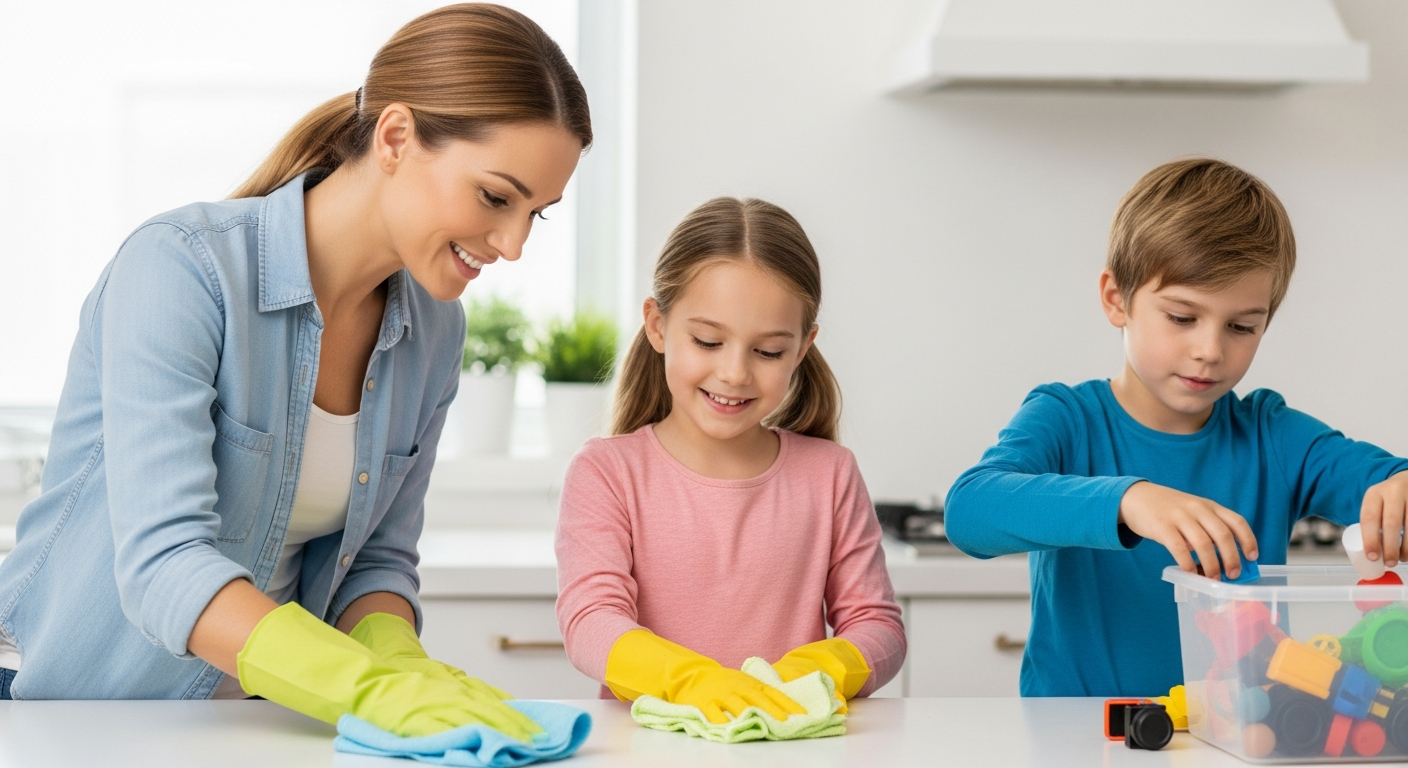
Chores don’t have to be a solitary activity. Make it a family affair by working together on household tasks.
This not only lightens the load for everyone but also creates opportunities for bonding and teamwork. Put on some music and make it a fun, collaborative experience.
Assign age-appropriate chores to each family member and work together to complete them. For example, you could have one child vacuum while another dusts and you handle the mopping.
This teaches children the importance of teamwork and cooperation, and it also reinforces the idea that everyone contributes to the upkeep of the household. It also provides an opportunity to model good work habits and attitudes.
Consider having a weekly family cleaning day where everyone works together to tidy up the house. This can be a fun and productive way to spend time together as a family.
You can also make it a game by setting a timer and seeing how quickly you can complete the chores together. This adds an element of fun and competition to the task.
Another idea is to assign different roles to each family member. For example, one person could be in charge of playing music, while another could be in charge of providing snacks and drinks.
This helps to keep everyone engaged and motivated. It also fosters a sense of shared responsibility and teamwork.
When working together on chores, be sure to communicate effectively and support each other. Offer help and encouragement when needed, and celebrate your successes together.
This helps to create a positive and supportive environment where everyone feels valued and appreciated. It also strengthens family bonds and creates lasting memories.
Remember that making chores a family affair is not just about getting the work done. It’s also about creating opportunities for bonding, teamwork, and fun. Make it a positive experience for everyone involved.
By working together, you can create a cleaner and more organized home while also strengthening your family bonds. It’s a win-win situation for everyone.
Consistency is Key
Consistency is crucial for establishing a successful chore routine for kids. Stick to the schedule as much as possible, even on weekends and holidays.
This helps children develop a sense of routine and understand that chores are a regular part of their responsibilities. Be firm but fair, and avoid making exceptions unless absolutely necessary.
It might be tempting to let chores slide when things get busy, but this can undermine the progress you’ve made. Instead, try to find ways to adapt the schedule to accommodate changing circumstances.
For example, if you’re going on vacation, you could assign extra chores in the days leading up to the trip to prepare the house. Or, if your child has a particularly busy week with school or extracurricular activities, you could temporarily reduce their chore load.
Establish a consistent time for chores to be completed each day or week. This helps children develop a sense of routine and makes it easier for them to remember their responsibilities.
For example, you could schedule chores for after dinner or on Saturday mornings. The key is to find a time that works for your family and stick to it as much as possible.
Be sure to communicate the chore schedule clearly to your children. Make sure they understand what chores they are responsible for and when they need to be completed.
You can also post the chore schedule in a visible location, such as on the refrigerator or in their bedroom. This helps them stay on track and remember their responsibilities.
If your children are struggling to stay consistent with their chores, consider implementing a system of reminders. You can set alarms on their phones or use a chore tracking app to help them remember their responsibilities.
It’s also important to be consistent with your expectations. Make sure your children understand what is expected of them and that you will hold them accountable for completing their chores.
Avoid making excuses for them or letting them off the hook when they don’t complete their chores. This sends the message that chores are not important and undermines the entire routine.
Remember that consistency is key to success when it comes to chore routines. By sticking to the schedule and holding your children accountable, you can help them develop a sense of responsibility and contribute to the household.
Dealing with Resistance
It’s not uncommon for children to resist doing chores, especially when they’re first introduced. Be prepared to address this resistance with patience and understanding.
Try to understand the reasons behind their reluctance. Are they feeling overwhelmed by the task? Do they not understand how to do it? Are they simply trying to avoid work?
Once you understand the underlying issue, you can address it more effectively. If they’re feeling overwhelmed, break the chore down into smaller steps.
If they don’t understand how to do it, provide clear instructions and demonstrations. If they’re simply trying to avoid work, be firm and remind them of their responsibilities.
When faced with resistance, try to remain calm and avoid getting into a power struggle. This will only escalate the situation and make it more difficult to resolve.
Instead, try to empathize with your child’s feelings and acknowledge their frustration. Let them know that you understand that chores are not always fun, but that they are a necessary part of life.
Offer to help them with the chore or to work together to complete it. This can make the task seem less daunting and more manageable.
You can also try to make the chore more enjoyable by putting on some music or turning it into a game. The goal is to find ways to make the chore less of a burden and more of a positive experience.
If your child is consistently resistant to doing chores, consider having a conversation with them about their responsibilities and the importance of contributing to the household.
Explain to them that chores are not just about helping you, but also about teaching them valuable life skills and preparing them for adulthood. Help them understand the bigger picture.
Be willing to negotiate and compromise. If your child is resistant to a particular chore, consider swapping it for another chore that they are more willing to do.
The goal is to find a solution that works for everyone and that helps your child feel like they have some control over their responsibilities. Flexibility is key to success.
Don’t Forget to Have Fun
Chores don’t have to be a drag. Find ways to make them fun and engaging for your children. Turn on some music, play a game, or offer silly challenges to make the time go by faster.
You could also try incorporating chores into family activities. For example, you could have a family cleaning day where everyone works together to tidy up the house.
This not only gets the chores done but also creates a sense of camaraderie and teamwork. You can also make it a competition to see who can complete their chores the fastest or with the most creativity.
The key is to find ways to make chores less of a burden and more of an enjoyable experience. This will not only make it easier to get your children to do their chores but also teach them valuable life skills in a positive and engaging way.
Turn on some upbeat music and have a dance party while you clean. This can make the time go by faster and make the chore more enjoyable.
You can also create a playlist of your children’s favorite songs and let them take turns choosing the music. This gives them a sense of ownership and control over the situation.
Turn chores into a game by setting a timer and seeing who can complete their chore the fastest. This adds an element of competition and excitement to the task.
You can also offer small prizes to the winner, such as extra screen time or a small treat. This motivates children to do their best and makes chores more fun.
Get creative with chores by turning them into a scavenger hunt. Hide small objects around the house and have your children find them while they are cleaning.
This makes chores more engaging and interactive. It also helps children develop their problem-solving skills.
Use positive reinforcement to encourage your children and make chores more enjoyable. Offer praise and encouragement when they complete their chores well.
Let them know that you appreciate their help and that you are proud of their efforts. This helps to foster a positive attitude towards chores and makes them more likely to cooperate in the future.
Conclusion
Establishing a chore routine for kids is a valuable investment in their future. It teaches them responsibility, life skills, and the importance of contributing to the family.
By following these guidelines and tailoring the routine to your family’s specific needs, you can create a system that benefits everyone. Remember to be patient, consistent, and positive, and your children will reap the rewards of a well-structured chore routine for kids for years to come.
The benefits of a chore routine extend far beyond a clean house. It’s about building character and preparing your children for success in life.
So, take the time to create a chore routine that works for your family, and watch your children grow into responsible and capable individuals. It’s an investment that will pay off for years to come.